
Pump type
Centrifugal, booster, wastewater and positive-displacement pumps do not share one torque or overload profile. Name the pump before choosing normal-duty or heavy-duty current.
Pump application selection
A pump VFD is selected from motor current, pump type and the process function the drive must perform. Centrifugal pumps are often variable-torque; positive-displacement pumps are usually constant-torque. Confirm PID, minimum flow, dry-run protection and multi-pump logic before comparing models. Send motor and pump data on WhatsApp for a sourcing check. This page is not a stocked pump-drive catalog.
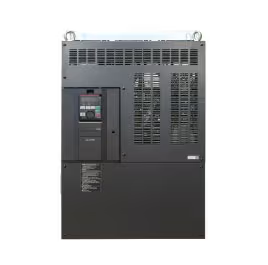
Selection foundation
The commercial VFD category covers industrial drives in general. This page owns pump-specific duty, hydraulic process functions and an application WhatsApp path. We can source a suitable drive or panel once the motor current, supply, pump type and control requirement are defined. Exact catalog numbers are confirmed against current manufacturer data; listing a family name here is not a stock, authorization or drop-in claim.
Centrifugal, booster, wastewater and positive-displacement pumps do not share one torque or overload profile. Name the pump before choosing normal-duty or heavy-duty current.
Size from nameplate current and the required overload, then apply ambient, altitude and enclosure derating. Horsepower alone is not enough.
Pressure, flow or level control needs a defined setpoint, sensor signal and PID action. A speed pot is not the same as closed-loop pump control.
Minimum flow, dry-run, pipe-fill, sleep/wake and multi-pump alternation change the firmware and I/O that the drive or panel must provide.
How pump VFDs are selected
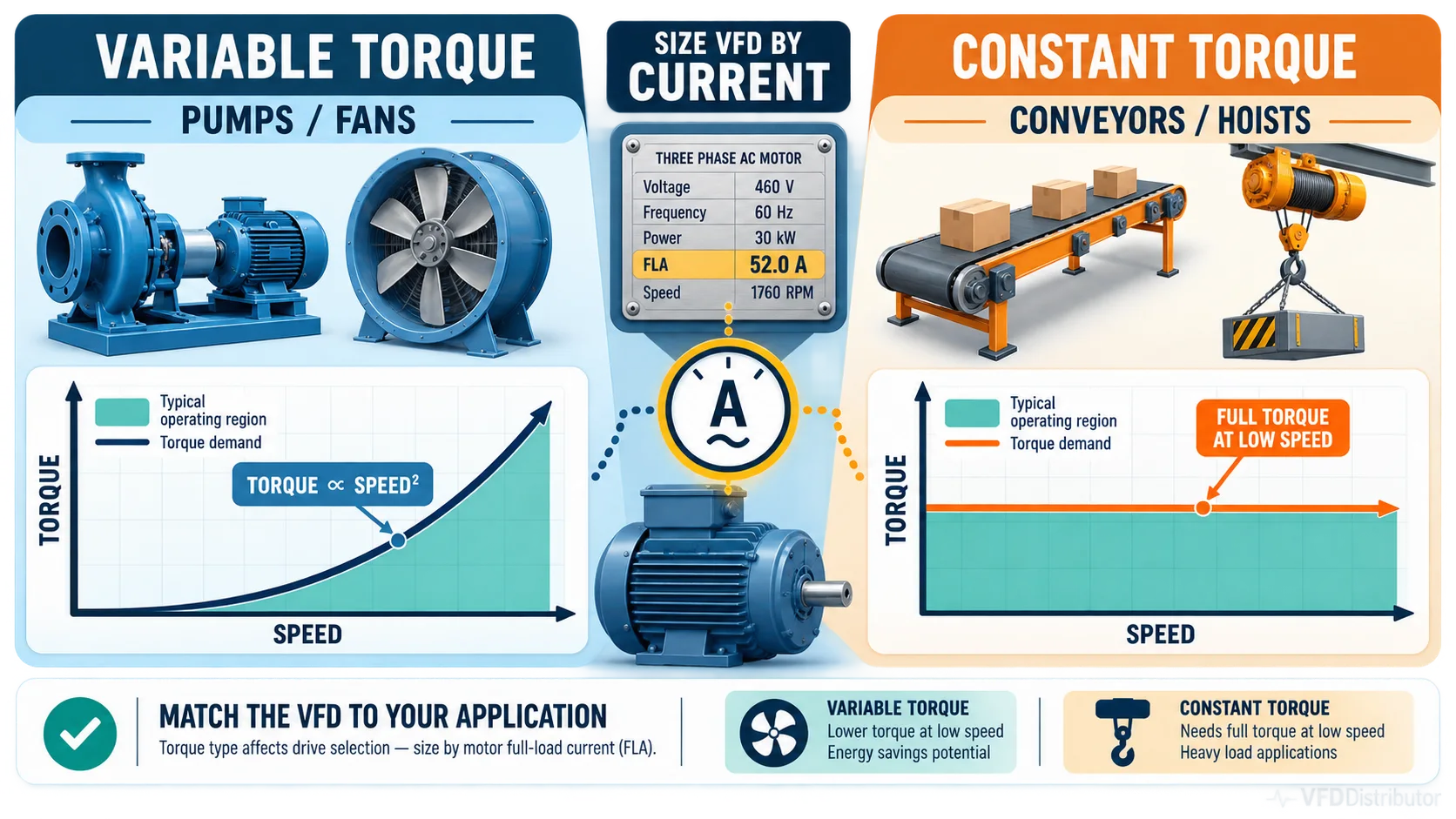
01 · Duty
Centrifugal pumps often follow a variable-torque curve: required torque falls as speed falls, provided the system is not dominated by static head. In those cases a normal-duty rating, V/f or sensorless vector control, and a checked minimum speed can be a valid starting point.
Positive-displacement pumps, high-viscosity process pumps and some loaded lift applications behave closer to constant torque. They can demand heavy-duty current, stronger low-speed torque and a different overload table. Do not copy a fan or HVAC drive rating onto every pump.
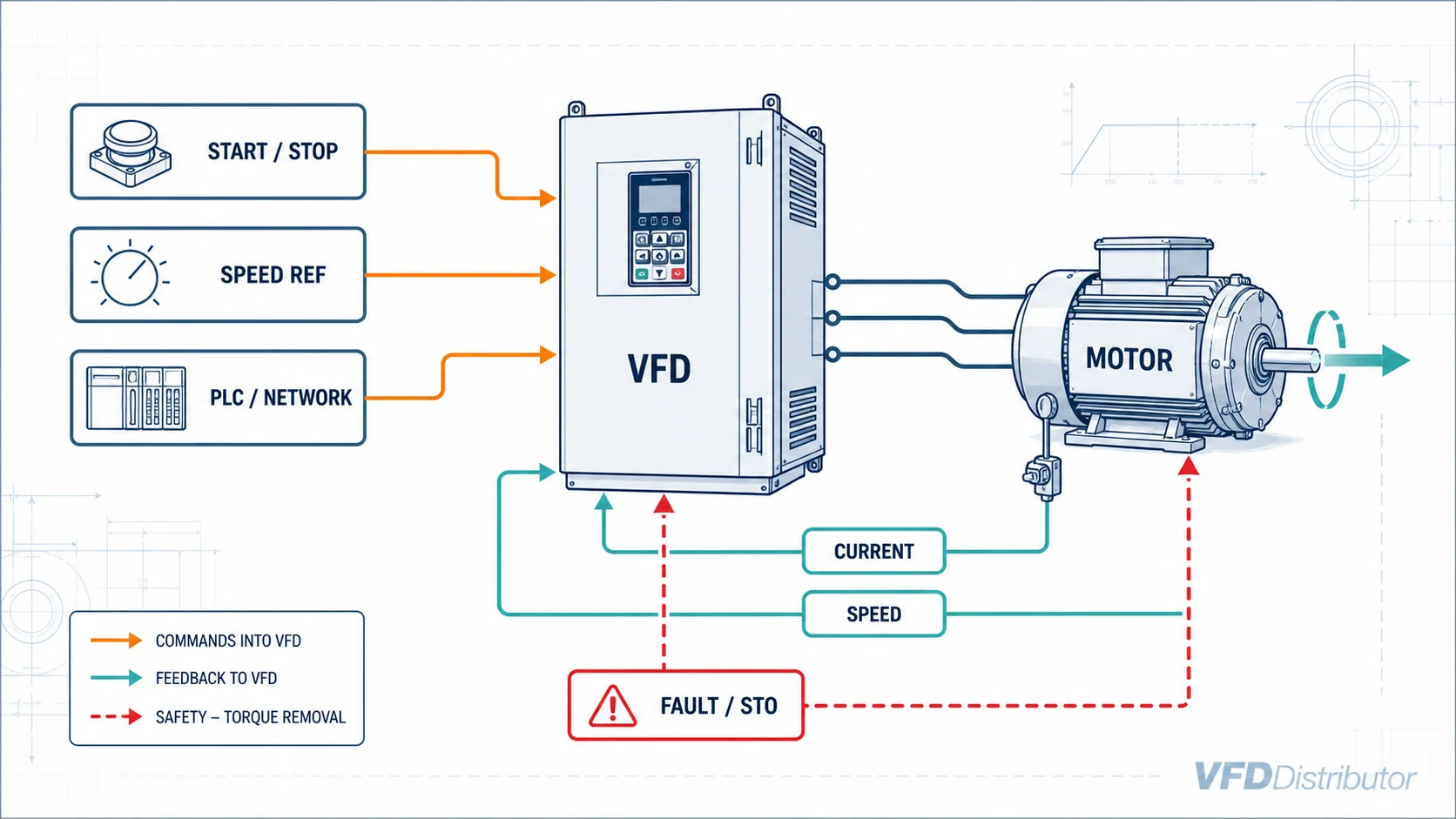
02 · Process control
Many pump systems need the drive to hold pressure, flow or level, not just a speed setpoint. That requires a feedback signal, PID tuning limits, a defined sleep/wake band and a plan for what happens when the setpoint cannot be met.
Multi-pump booster or lift stations add alternation, lag-pump staging and often a local override. Those functions can live in the drive firmware, a small controller or a VFD panel. Decide that boundary before comparing catalog numbers.
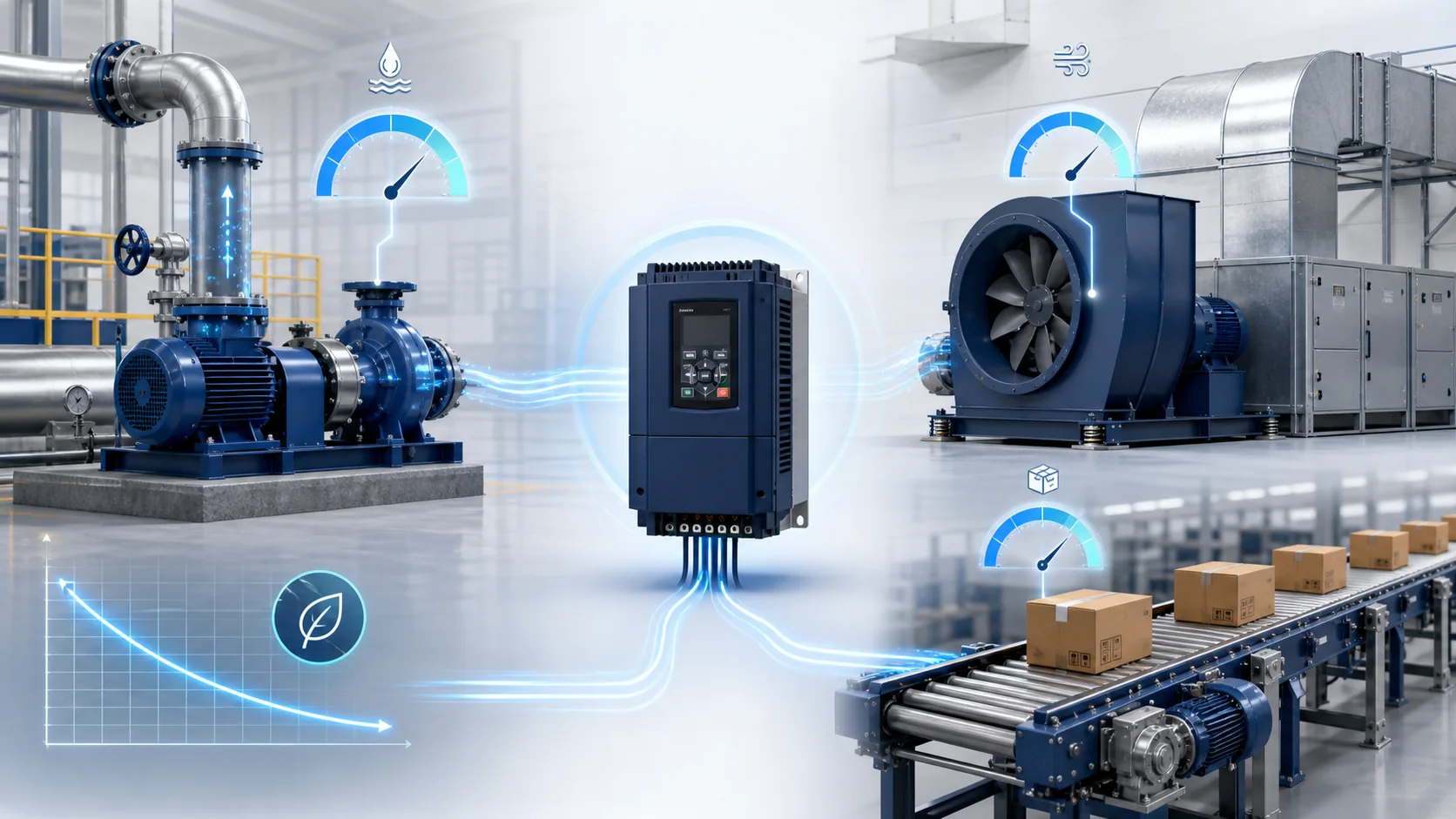
03 · Protection
A pump VFD can damage the pump if it keeps running against a closed valve, an empty suction line or a speed that falls below the required cooling or lubrication flow. Dry-run, underload, minimum-frequency and pipe-fill functions only help when they are specified and commissioned against the real hydraulic system.
Long motor cables, older insulation and weak supplies still follow the same power-quality rules as any other VFD. Reactors or filters stay on the power-quality page until a verified accessory is available; this page only records when those accessories should be considered.
Pump duties
These groups narrow the requirement. They are not a stocked product list. Final selection still depends on motor current, duty and the process function.
Browse VFD model reference librarySpeed is used to follow flow or pressure demand. Check minimum flow, static head and whether affinity-law energy savings actually apply to the system curve.
Typical fit: Water transfer, circulation and many HVAC secondary pumps
One or more drives hold a pressure or level setpoint and stage lag pumps. Confirm sensor, alternation, sleep band and local manual override before choosing firmware or a panel.
Typical fit: Building boosters and packaged pumping sets
Level control, solids handling, starts per hour and wet-well logic often matter more than a generic variable-torque table. Confirm the pump curve and restart conditions.
Typical fit: Lift stations and wastewater transfer
Treat torque as constant until proven otherwise. Overload, low-speed cooling, relief-valve behavior and process interlocks usually dominate the selection.
Typical fit: Dosing, high-viscosity and many process pumps
Quick selection
Choose the closest pump type, motor power and supply. WhatsApp opens with this page already attached; add current, head/flow and destination in the message.
Typical specification scope
Application checks
Affinity-law savings apply to suitable centrifugal systems with a confirmed load profile. High static head, bypass flow or a short duty cycle can erase the expected reduction.
If the pump only needs a gentler start and then runs at line speed, compare a soft starter. Use a VFD when variable speed, PID or pump-protection functions are required.
An existing pump-drive code is a starting point, not a promised drop-in. I/O, firmware functions, dimensions and protection still need a replacement checklist.
Decision guide
From requirement to quotation
WhatsApp already includes the pump page reference. Add current, supply voltage and pump type so the first reply can be specific.
We check torque class, PID, protection and whether a drive, panel or accessory path is the right commercial next step.
A quotation names a current catalog number, status and limits. No public price, stock or authorization claim is made on this page.
Frequently asked questions
No. Many centrifugal pumps can, but static head, minimum flow and positive-displacement pumps often need a different current table. Name the pump before choosing the duty rating.
Only when the hydraulic system actually lets power fall with speed. Affinity-law estimates need a real load profile. This page does not publish a fixed percentage saving.
No. This is an application sourcing page. Browse the VFD category or model library for reference records, then send the motor and pump data for a current availability check.
No. Names such as a fan-and-pump series only describe a product path. The exact order code, firmware, options and regional status still have to be verified.
When isolation, bypass, local controls, multi-pump logic or the enclosure must be coordinated. Use the VFD panels page for that package boundary.
We include this page, your selected model or specifications, and a reference. You only add quantity and destination before sending.